
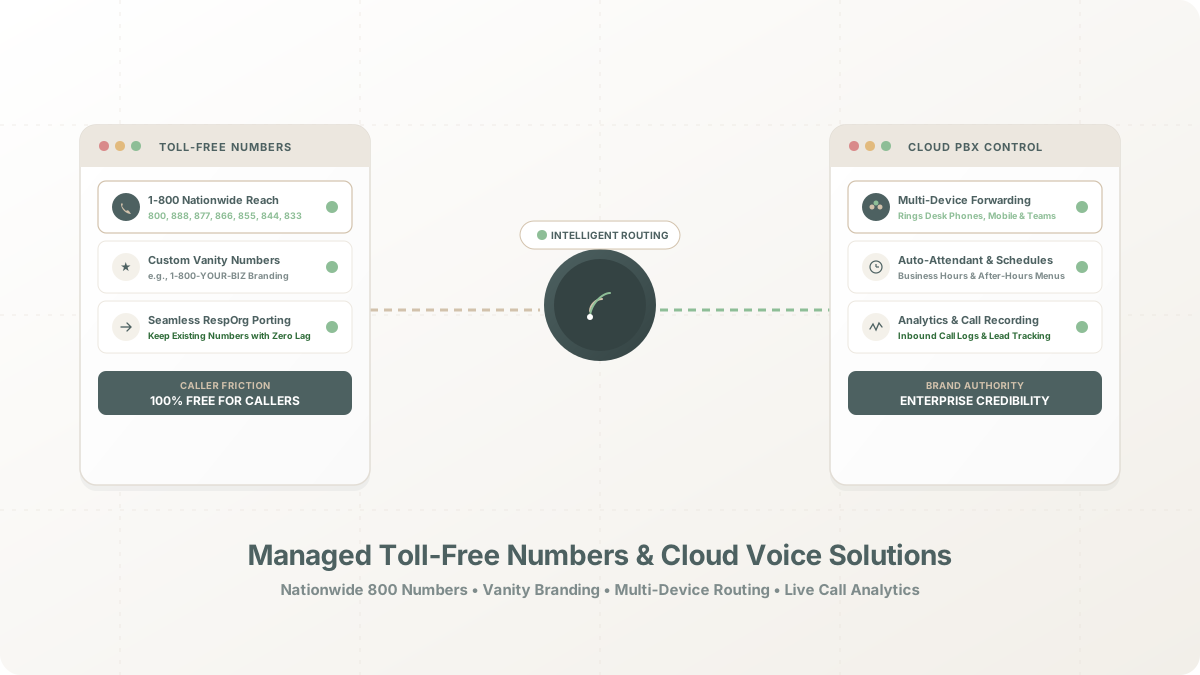
Nationwide 800, 888, 877, 866 prefixes
Nationwide customer accessibility
Detailed incoming call analytics
Toll-free numbers are telephone numbers that can be dialed from landlines or mobile phones within a specific country at no cost to the person making the call.
Instead of the caller paying for the connection or long-distance charges, the business or entity that owns the number absorbs the entire cost of the incoming call.
Distinct Prefixes: Toll-free numbers are easily identified by special three-digit prefixes. The most common globally recognized prefix is 800.
Country-Specific: They are generally designed to work only within the borders of the country they were registered in. Calling a standard domestic toll-free number from abroad will usually not work or will incur international call rates for the caller.
Regulated: Because they are a finite resource, they are assigned on a first-come, first-served basis by specific organizations designated by government telecommunications authorities (e.g., RespOrgs in the US, BTCL in Bangladesh).
Toll-free numbers work by reversing the cost of the telephone call.
Call Initiation: A customer dials the published toll-free number (e.g., 1-800-COMPANY).
Carrier Interception: The telecom carrier intercepts the call, recognizing the specific toll-free prefix.
Database Lookup: The system looks up the routing information in a centralized toll-free database to determine where the call should actually be sent.
Routing: The system routes the call to the actual “behind-the-scenes” destination number designated by the business (this can be a traditional landline, a mobile phone, or a VoIP/cloud phone system).
Billing: The carrier bills the business that owns the toll-free number for the total minutes of the call based on their pre-agreed rate structure.
Every country or region has its own set of distinct prefixes used to identify toll-free services.
| Prefix Format | Locations Commonly Used | Example |
| 800 | International standard, highly common | 1-800-XXX-XXXX (US/Canada), 0800-XXX-XXX (UK) |
| 888, 877, 866, 855, 844, 833 | United States, Canada, parts of Caribbean | 1-877-XXX-XXXX |
| 1800 | India, Bangladesh, Indonesia | 1800-XXX-XXXX |
| 0800, 0808 | United Kingdom | 0800-XXXXXX |
While they all work on the same principle, there are different formats designed for specific business strategies.
| Type | Description | Best Use Case |
| Standard | A randomly assigned toll-free number (e.g., 1-800-555-0199). | Basic functional use where easy recall isn’t the primary goal. |
| Vanity | A custom number that spells a word or easy-to-remember pattern. | Marketing campaigns, brand building (e.g., 1-800-FLOWERS or 1-800-CONTACTS). |
| International (ITFS/UIFN) | Special numbers designed to allow international customers to call free of charge. | Global companies providing customer support across multiple continents. |
Implementing a toll-free number offers several advantages, especially regarding customer acquisition and retention.
Improved Customer Access: Removes the cost barrier, encouraging more customers to call for pre-sale questions, support, or ordering.
Professional Image: Having an 800 number immediately signals that a company is established, credible, and serious about customer service.
National Presence: Toll-free numbers are not tied to a specific geographic area code, allowing small businesses to appear large and have a nationwide reach.
Portability: The number is owned by the business, not the specific phone location, meaning the business can keep the same number even if they move its physical office location.
Because the business pays for the incoming calls, there are specific costs associated with maintaining a toll-free service. Modern VoIP systems have made these services significantly cheaper than their legacy counterparts.
Monthly Subscription Fees: Most providers charge a flat monthly fee per number to keep it active.
Usage Costs (Per Minute): This is the most significant cost. The business is billed based on the total minutes used by incoming callers.
Setup/Activation Costs: There may be an initial fee to acquire or “activate” the number, particularly for rare or vanity numbers. VoIP systems often have hardware-free, instant setup.
Save Time
Find and compare Trusted Providers
Make Smarter Choice
Get the right solutions for your business needs and budget
Grow With the Right Tools
Build a Strong Foundation for Long Term Success
Smarter setup. Stronger Business
Nationwide 800, 888, 877, 866 prefixes
Nationwide customer accessibility
Detailed incoming call analytics
Toll-free numbers are telephone numbers that can be dialed from landlines or mobile phones within a specific country at no cost to the person making the call.
Instead of the caller paying for the connection or long-distance charges, the business or entity that owns the number absorbs the entire cost of the incoming call.
Distinct Prefixes: Toll-free numbers are easily identified by special three-digit prefixes. The most common globally recognized prefix is 800.
Country-Specific: They are generally designed to work only within the borders of the country they were registered in. Calling a standard domestic toll-free number from abroad will usually not work or will incur international call rates for the caller.
Regulated: Because they are a finite resource, they are assigned on a first-come, first-served basis by specific organizations designated by government telecommunications authorities (e.g., RespOrgs in the US, BTCL in Bangladesh).
Toll-free numbers work by reversing the cost of the telephone call.
Call Initiation: A customer dials the published toll-free number (e.g., 1-800-COMPANY).
Carrier Interception: The telecom carrier intercepts the call, recognizing the specific toll-free prefix.
Database Lookup: The system looks up the routing information in a centralized toll-free database to determine where the call should actually be sent.
Routing: The system routes the call to the actual “behind-the-scenes” destination number designated by the business (this can be a traditional landline, a mobile phone, or a VoIP/cloud phone system).
Billing: The carrier bills the business that owns the toll-free number for the total minutes of the call based on their pre-agreed rate structure.
Every country or region has its own set of distinct prefixes used to identify toll-free services.
| Prefix Format | Locations Commonly Used | Example |
| 800 | International standard, highly common | 1-800-XXX-XXXX (US/Canada), 0800-XXX-XXX (UK) |
| 888, 877, 866, 855, 844, 833 | United States, Canada, parts of Caribbean | 1-877-XXX-XXXX |
| 1800 | India, Bangladesh, Indonesia | 1800-XXX-XXXX |
| 0800, 0808 | United Kingdom | 0800-XXXXXX |
While they all work on the same principle, there are different formats designed for specific business strategies.
| Type | Description | Best Use Case |
| Standard | A randomly assigned toll-free number (e.g., 1-800-555-0199). | Basic functional use where easy recall isn’t the primary goal. |
| Vanity | A custom number that spells a word or easy-to-remember pattern. | Marketing campaigns, brand building (e.g., 1-800-FLOWERS or 1-800-CONTACTS). |
| International (ITFS/UIFN) | Special numbers designed to allow international customers to call free of charge. | Global companies providing customer support across multiple continents. |
Implementing a toll-free number offers several advantages, especially regarding customer acquisition and retention.
Improved Customer Access: Removes the cost barrier, encouraging more customers to call for pre-sale questions, support, or ordering.
Professional Image: Having an 800 number immediately signals that a company is established, credible, and serious about customer service.
National Presence: Toll-free numbers are not tied to a specific geographic area code, allowing small businesses to appear large and have a nationwide reach.
Portability: The number is owned by the business, not the specific phone location, meaning the business can keep the same number even if they move its physical office location.
Because the business pays for the incoming calls, there are specific costs associated with maintaining a toll-free service. Modern VoIP systems have made these services significantly cheaper than their legacy counterparts.
Monthly Subscription Fees: Most providers charge a flat monthly fee per number to keep it active.
Usage Costs (Per Minute): This is the most significant cost. The business is billed based on the total minutes used by incoming callers.
Setup/Activation Costs: There may be an initial fee to acquire or “activate” the number, particularly for rare or vanity numbers. VoIP systems often have hardware-free, instant setup.
Domain availability search & securing .com
DNS connection to web host & business email
Domain privacy protection setup
Automated weekly cloud backups
Core WordPress & plugin updates
Rapid bug fixing & uptime monitoring
Fast page caching & image compression
SSL certificate HTTPS configuration
Core Web Vitals performance tuning
Search engine meta tags & title optimization
XML sitemap & Google Search Console indexing
Schema markup structured data setup
High-converting Homepage & About copy
Detailed service landing page text
Privacy Policy & Terms template setup
Searchable FAQ accordion widgets
High-resolution image/video galleries
Company news & blog architecture
Partner with skilled developers ready to bring your ideas to life, delivering reliable, scalable, and custom-built solutions from start to finish.